A kitchen can start to feel tired long before it stops being useful. Worn doors, dated colours, poor storage and awkward work areas can make everyday cooking harder. When this happens, many homeowners ask the same question: should I renovate the existing kitchen or replace it with a new fitted kitchen?
There is no single answer. The right choice depends on the condition of your current cabinets, the layout of the room, how much storage you need and how much you want to change. A simple renovation can refresh a sound kitchen, while a new fitted kitchen can make better use of the whole room.
Knowing the difference can help you spend your money where it matters.
When Is a Kitchen Renovation Enough?
A kitchen renovation usually means improving parts of the existing kitchen rather than starting again. This may involve replacing cupboard doors, handles, worktops, splashbacks, taps, lighting or appliances while keeping much of the existing cabinetry and layout.
This can make sense when the kitchen units are still in good condition and the basic layout works well. If you have enough cupboard space, the work triangle feels comfortable and there are no major problems with the walls, plumbing or electrics, a smaller update may give the room a fresh look without the disruption of a full replacement.
A new worktop and fresh cabinet fronts can alter the appearance of a room quite quickly. Changing lighting, flooring or wall finishes can also make an older kitchen feel more current.
However, renovation has limits. A new door will not create extra storage. A new worktop will not fix a poor layout. If your cabinets have awkward gaps, difficult corners or limited internal storage, cosmetic changes may leave the main problem untouched.
It is also worth checking the condition of the existing units before spending money on new finishes. Cabinets that are swollen by water, damaged, poorly fitted or reaching the end of their useful life may not be a good base for further investment. Old plumbing or electrical work may also need attention.
A useful question is not simply, “Can my kitchen be renovated?” It is, “Will renovating solve the reasons I no longer like using it?” If the answer is mostly yes, renovation may be sensible. If the answer is no, a new design deserves closer consideration.
When Is a New Fitted Kitchen the Better Choice?
A new fitted kitchen becomes more attractive when the room needs a change in layout, storage or function as well as appearance. Instead of working around the existing units, the design can be planned around the room and the way you use it.
This is particularly useful in smaller or awkward spaces. A made-to-measure kitchen can use areas that standard units may leave unused. Tall cabinets can increase storage, while carefully planned drawers and cupboards can make everyday items easier to reach. Corner units, integrated appliances and worktop space can also be considered as part of the overall layout rather than added as an afterthought.
Layout is often the biggest difference between renovation and replacement. If your sink, hob, fridge and main preparation area are poorly placed, changing the cabinet fronts will not improve the workflow. A new fitted kitchen gives you the chance to rethink these positions, subject to the practical requirements of plumbing, ventilation and electrical connections.
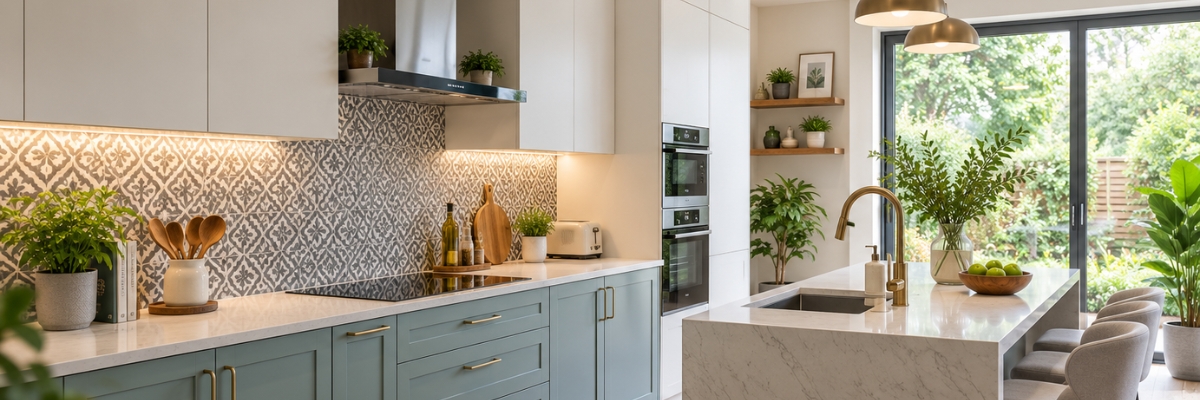
A new kitchen also gives you more control over the visual result. Depending on the design, you might choose matt, gloss, wood-effect or painted finishes, along with quartz, granite, laminate or solid surface worktops. Handleless doors, integrated appliances and carefully planned lighting can create a cleaner appearance without making the room difficult to use.
The important point is that a fitted kitchen should not be chosen only because it looks new. Good kitchen design starts with measurements, storage needs, movement around the room and the tasks you carry out every day. A design that looks impressive but has too little worktop space or poor storage can become frustrating very quickly.
For this reason, the design stage matters as much as the materials. A considered plan can show how the finished room may work before installation begins and can help identify problems while changes are still easier to make.
Kitchen Renovation vs New Fitted Kitchen: What Should You Consider?
Cost is naturally one of the first things homeowners think about, but it should not be the only factor. A renovation may have a lower starting cost when the existing structure is sound. A new fitted kitchen can cost more because it may involve new cabinetry, worktops, appliances, installation and changes to services. The final figure depends on the size and complexity of the project.
Think about how long you expect to stay in the property too. If you are planning to move soon, a focused renovation may be enough to improve the room. If you expect to stay for many years, investing in a kitchen that works properly for your household can make more sense.
Your daily routine should also guide the decision. Someone who cooks often may value wide preparation areas, deep drawers and easy access to appliances. A family may need more storage and durable surfaces. In a compact kitchen, making every section work well may matter more than adding decorative features.
The condition of the existing room is another key factor. Damp, uneven walls, damaged cabinets, old flooring or outdated services can turn a simple renovation into a series of repairs. If several parts need replacing, compare the total renovation cost with the cost of a complete fitted kitchen before deciding.
Mixing new and old elements can work, but only when the finishes and proportions complement each other. If you are replacing several visible parts, the result may still feel mismatched if the original cabinets, appliances and worktops were designed for a different style.
A new fitted kitchen can provide a more cohesive result because the cabinetry, storage, worktops, finishes and appliance positions are planned together. This does not mean every homeowner needs a complete replacement. It means the decision should be based on the whole room rather than one feature.
One more point is future flexibility. A kitchen should suit the people using it now, but it is worth thinking about how needs may change. Extra drawers, accessible storage, durable worktops and a sensible appliance layout can make the room easier to use for years. This is one reason a careful design discussion can be more useful than choosing finishes first.
For many homeowners, the best starting point is a proper design assessment. Measuring the space and discussing how it is used can reveal whether the existing kitchen has enough potential for renovation or whether a new fitted design would address the real issues.
At Central Bedrooms and Kitchens, fitted kitchens are planned around room layout, storage and everyday use. The company offers made-to-measure designs, a range of cabinet and worktop finishes, integrated appliance options and professional installation. The process covers design and measurement through to fitting and final checks, with 3D design layouts available to help homeowners visualise the proposed result.
The aim is not simply to replace an old kitchen. It is to create a room where storage, movement, materials and appearance work together. That distinction is important when comparing a quick refresh with a full fitted kitchen project.
Frequently Asked Questions
Is it cheaper to renovate a kitchen or install a new fitted kitchen?
A kitchen renovation is often less expensive when the existing cabinets, layout and services are in good condition. However, several smaller upgrades can add up quickly. If many parts need changing, a new fitted kitchen may offer better value because the whole space can be planned together.
How do I know if my kitchen needs replacing?
Look at the condition of the cabinets, the amount of storage, the layout and the way the room feels during everyday use. If the units are damaged or the layout creates ongoing problems, replacement may be worth considering. If the structure is sound and the main issue is appearance, renovation could be enough.
Can I change the layout without replacing the whole kitchen?
Sometimes, but it depends on the existing cabinetry and the position of plumbing, electrical connections and appliances. Small changes may be possible, but a major layout change is usually easier when the kitchen is being redesigned from the start.
Is a fitted kitchen worth it for a small room?
Yes. A small kitchen can benefit from careful planning because every cupboard, drawer and worktop section matters. Made-to-measure cabinetry can help use awkward areas and provide storage that standard units may not achieve.
How long does a new fitted kitchen take to install?
There is no fixed timeframe because it depends on the size, design and work involved. Design, manufacturing, preparation and installation all affect the schedule. A clear project plan should be agreed before work begins.