A small living room can be difficult to organise when the television, storage, speakers, cables and decorative features all need their own place. A media wall can bring these elements together, but only when the design is planned around the room rather than simply adding a large feature to one wall. The aim is to create a useful focal point without making the room feel crowded.
Planning a media wall for a small living room starts with room measurements, viewing position and television size. Storage, cable routes, lighting and any fireplace should then be considered as part of the same layout. Central Bedrooms and Kitchens approaches media walls as custom-built interior features, with attention to room dimensions, storage, display areas, finishes and installation. This makes careful planning especially important in compact spaces.
Start With the Room, Not the Television
The first step is to measure the wall and surrounding area. Look at the width and height of the wall, the position of doors and windows, the location of sockets, and the clear floor space in front of it. A small room can quickly feel restricted if the media wall projects too far into the living area.
Think about how people move through the room as well. A walkway beside the media wall should remain comfortable, while doors and drawers need enough clearance to open properly. If the sofa is close to the opposite wall, the screen position should also be checked from the main seating area. These measurements help prevent a design that looks good on paper but feels awkward in daily use.
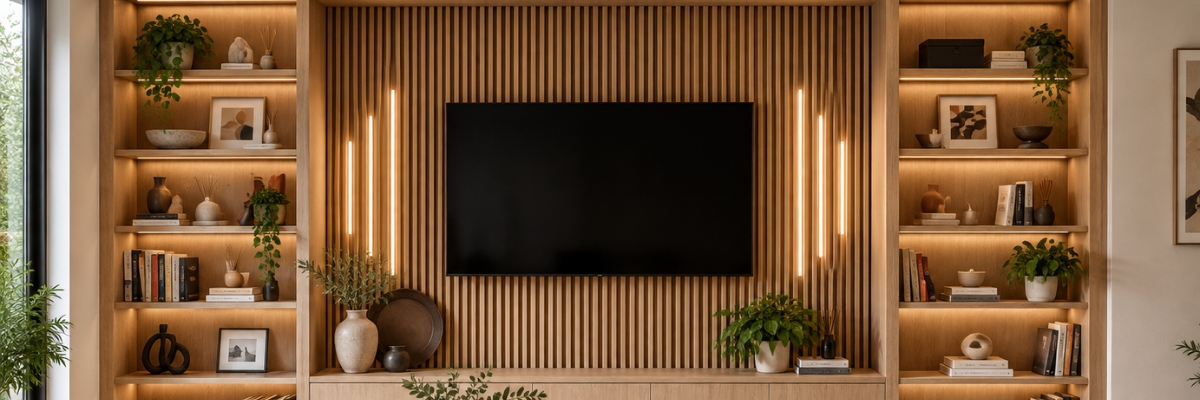
The television should not automatically determine the full width of the feature. In a compact living room, a balanced composition often works better than filling every available centimetre. The screen can sit within a wider panel, with shallow storage or open shelving around it, provided these elements do not make the wall feel heavy.
Before choosing finishes, decide what the media wall needs to do. Is it mainly for the television? Do you need closed storage for consoles, routers or accessories? Would open shelves be useful for books and decoration? Do you want an electric inset fireplace or integrated lighting? Answering these questions early helps keep the design focused.
Choose the Right Layout, Storage and TV Size
The layout of a small media wall should make the room feel organised rather than busy. A simple central television with low storage can work well when floor space is tight. Another option is a taller feature that uses vertical wall area, creating storage or display space without extending too far into the room.
Storage depth is important. Deep cupboards can take up valuable floor space, so compact cabinetry may be more suitable where the room is narrow. Closed storage can hide games consoles, remotes, cables and other equipment, while open shelving can provide space for books or a few decorative pieces.
Cable management should be planned before installation. HDMI cables, power leads, broadband equipment and speaker connections all need sensible routes. Leaving this until the end can result in visible wires or difficult access. A well-planned media wall can include concealed cable management, keeping the front of the feature visually calmer.
The television size also needs careful thought. Bigger is not always better in a small room. The screen should be positioned at a comfortable height from the main seating position, while speakers and soundbars should have enough room to work properly.
If an electric fireplace is part of the plan, its position and the manufacturer’s installation requirements need to be considered from the beginning. A fireplace can create a strong focal point below the television, but it should not dominate a small room. The proportions of the TV, fireplace, storage and surrounding panels should work together.
Pick Finishes That Keep a Small Room Balanced
The finish of a media wall has a strong effect on how it sits within a small living room. Matt finishes can give a quiet appearance, while wood-effect surfaces can add warmth. Stone textures and contemporary panel details can create a stronger feature, but they need to be balanced with the size of the room.
Colour matters too. A dark media wall can look striking, particularly when paired with controlled lighting, but it may feel visually heavier if the feature is very large. Lighter tones can help the wall blend more gently with the surrounding room. The best finish depends on existing flooring, furniture, wall colour and natural light.
Consider how the media wall will look when the television is switched off. The screen can become a dark rectangle in the room, so the surrounding cabinetry, shelving and panel design should help make the whole feature look intentional rather than centred only on the screen.
Central Bedrooms and Kitchens describes its media wall options as including matt, wood-effect, stone textures and contemporary panel detailing, along with floating units, shelving, concealed cable management, display niches and optional fireplace features.
Plan the Design Before Installation
A good media wall design should be resolved before construction begins. Start with accurate measurements and a clear understanding of what the room needs. Then consider the television, storage, cables, lighting and any fireplace as one connected design.
A design preview can be useful. Seeing the proposed proportions before installation makes it easier to judge whether the feature is too wide, too tall, too deep or too visually strong. Central Bedrooms and Kitchens says it provides detailed design layouts to help clients visualise the final result before installation.
Installation also needs proper planning. The wall may need to accommodate electrical connections, equipment ventilation and access for future maintenance. If devices are hidden inside cupboards, they still need sufficient airflow and a practical way to reach them. Any electrical work should be completed by a suitably qualified professional where required.
A media wall should ultimately make the living room easier to use. It can bring the television, storage, display and feature lighting into one considered area, while reducing visible cables and loose furniture. The key is to avoid designing the feature simply because it looks impressive in a photograph. In a small room, proportion and everyday function should lead the design.
For homeowners considering a custom media wall, a room assessment and clear design discussion are useful first steps. The process used by Central Bedrooms and Kitchens includes concept planning, custom design, installation and final detailing, with the room layout considered before the feature is fitted. That approach can help ensure the finished wall supports the room rather than taking it over.
Frequently Asked Questions
Is a media wall a good idea for a small living room?
Yes, a media wall can work well in a small living room when its depth, width and storage are planned around the available space. A compact design can combine the television, storage and cable management without requiring several separate pieces of furniture.
What size TV is best for a small living room media wall?
There is no single TV size that suits every small room. Viewing distance, seating position and the width of the wall should all be considered. The screen should feel comfortable to watch without making the rest of the feature look out of proportion.
Can a small media wall include storage?
Yes. A small media wall can include low cupboards, shelving or compact storage areas. Closed units are useful for keeping equipment and accessories out of sight, while open shelves can be used for selected decorative items.
How do you hide cables in a media wall?
Cables can be routed through planned internal channels so they are hidden behind finished panels or cabinetry. Cable routes should be considered before installation so power, HDMI, broadband and other connections can be reached safely when needed.
Can I have a fireplace under the TV in a small living room?
An electric fireplace can be included if the overall proportions and installation requirements allow it. The fireplace should be planned with the television, storage and wall dimensions rather than added as an afterthought.