A wardrobe can look impressive from the outside and still be frustrating to use inside. If shelves are too deep, hanging rails are in the wrong place, or drawers do not match what you store, useful space can quickly become wasted. The best internal layout for bespoke wardrobes is not one fixed design. It is the layout that matches your clothes, habits, room and the way you use the storage every day.
This matters because made-to-measure wardrobes give you more control over the inside than standard furniture. Central Bedrooms and Kitchens focuses on wardrobes designed around room dimensions and storage needs, with planning considered from design through to installation. Its wardrobe range includes fitted, sliding, loft and walk-in designs.
The right layout should make everyday tasks easier. You should be able to see what you own, reach it without moving other items and return things to their place without effort. The most useful approach is to plan the wardrobe from the inside out.
What Should a Good Bespoke Wardrobe Layout Include?
Start by thinking about what the wardrobe needs to hold. Hanging clothes usually take up the most vertical space, but folded clothes, shoes, bags, accessories and seasonal items need different types of storage. A good layout gives each group a sensible home rather than making every section identical.
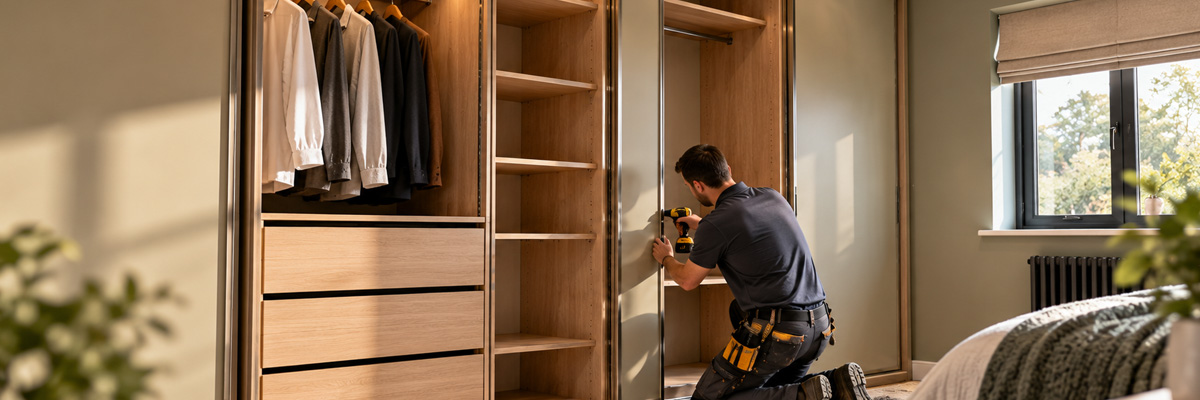
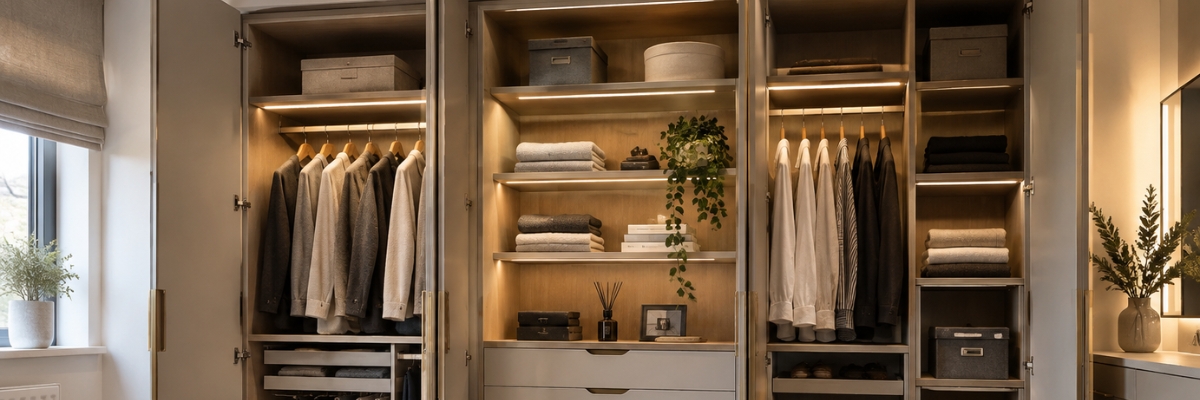
Hanging space is often the main part of a wardrobe. Full-height hanging is useful for dresses, coats, long skirts and other items that need extra drop. Shorter hanging sections work well for shirts, jackets and trousers. If you have a mixture of long and short garments, dividing the hanging space can give you more useful capacity than using one large rail.
Drawers are useful for folded clothing and smaller items. Their position matters. Drawers placed at a comfortable height are easier to use regularly. Shallow drawers can suit accessories, while deeper drawers can hold jumpers and other bulky clothing. Choose drawer sizes around what you actually store rather than adding drawers simply because there is room.
Shelving adds flexibility. Adjustable shelves can hold jumpers, bags, boxes or folded clothing, and the spacing can be planned around those items. Very deep shelves can make things at the back easy to forget, so depth should be planned with access in mind.
Shoes and accessories also deserve proper storage. Dedicated lower shelves can make shoes easier to see and reach, while smaller compartments can help organise belts, scarves and other accessories. The best choice depends on what you use most often.
A useful planning step is to measure your current storage before starting a new design. Notice which sections are always full and which ones are rarely used. Look at the length of your longest garments, the size of folded stacks and the number of shoes or bags you need to store. This gives a clearer picture of where space is really needed. It can also prevent a common mistake: designing a wardrobe around an ideal picture of storage rather than the things you actually own.
How Do You Plan the Best Internal Layout for Your Room?
The room itself should influence the wardrobe layout. A wide straight wall gives different options from a compact bedroom, alcove or loft with sloping ceilings. Central Bedrooms and Kitchens states that its wardrobes are made to measure and can be designed for compact and awkward spaces, including loft areas.
Door style also affects the internal storage. Sliding wardrobes can be useful where opening doors would take up valuable floor space. Their internal sections need to be arranged so commonly used items remain easy to reach through the available opening. Hinged doors provide a different access pattern and can allow a wider section to be viewed at once. Neither style is automatically right for every bedroom.
For a shared bedroom, separate hanging, shelving and drawer areas can make the wardrobe easier for two people to manage. The split does not always need to be equal. It should reflect how much storage each person needs.
Before the final design is agreed, think about the items that cause the most storage problems. Perhaps coats need more hanging height, shoes need a clearer home, or folded jumpers take over the shelves. These details are more useful than simply saying you need more storage because they help shape the design around real use.
Central Bedrooms and Kitchens also offers different finishes and hardware options, while its fitted bedroom service focuses on practical organisation, space-efficient layouts and coordinated storage. The external appearance can therefore be considered alongside the internal arrangement, but the storage plan should remain the starting point.
Which Internal Layout Is Best for Different Storage Needs?
There is no single internal wardrobe layout that works for everyone. Someone with many dresses may need more full-height hanging space, while someone with more folded clothing may need additional drawers and shelves. The best design reflects the belongings you actually have.
A useful general arrangement combines hanging space with drawers and shelves. If hanging clothes dominate your wardrobe, give them more rail space. If folded clothing is the main issue, reduce some hanging sections and increase shelving or drawers. The aim is balance, not an equal number of each storage type.
Walk-in wardrobes allow more freedom because storage can be arranged around the available floor area. You may be able to separate hanging, shelving and dressing areas while keeping movement comfortable. Smaller fitted wardrobes need more careful use of vertical space because every section has to work harder.
Loft wardrobes require another approach. Sloping ceilings can make standard storage difficult, but a design can follow the available shape. Lower sections can work for shoes, boxes or folded items, while taller areas can provide hanging space where the ceiling allows it. This shows why internal storage should be planned with the room rather than separately from it.
Bespoke Wardrobes offers finishes including matt, gloss, wood-effect, glass and mirrored panels. These choices influence the look of the room, while the internal design determines how useful the wardrobe is day to day.
A simple test is to imagine a normal morning. Can you reach your most-used clothes quickly? Can you see folded items without moving several things? Can you store shoes without creating a pile? Can you put things away as easily as you take them out? If the answer is yes, the layout is doing its job.
For many homeowners, it makes sense to plan the internal storage before choosing the final external style. A design consultation can turn measurements and storage needs into a workable arrangement. Central Bedrooms and Kitchens describes a process that covers consultation, measurement, design and professional installation, with design layouts available to help visualise the result.
Frequently Asked Questions
What is the best internal layout for bespoke wardrobes?
The best layout depends on what you store and how you use your bedroom. A balanced design often combines hanging rails, shelves and drawers, but the amount of each should reflect your clothes, shoes and accessories.
How much hanging space should a wardrobe have?
There is no fixed amount for everyone. Consider the clothes you normally hang and separate long garments from shorter items. This gives a better starting point than choosing a layout based only on wardrobe width.
Are drawers useful inside fitted wardrobes?
Yes. Drawers are useful for folded clothes and smaller items that are easier to organise in a closed compartment. Their size and position should be based on what you use most often.
Should wardrobes have adjustable shelves?
Adjustable shelves can be useful when storage needs change. They allow the spacing to suit clothing, bags, boxes and other belongings, making the wardrobe more flexible over time.
Is a sliding wardrobe good for a small bedroom?
Sliding doors can help where floor space is limited because the doors do not need the same outward opening area as hinged doors. The internal layout should still keep frequently used items easy to reach.